02 / Accommodation
A good stay begins
with clear details.
Keep the useful questions near the reservation. A little clarity before arrival can leave more attention for the stay itself.
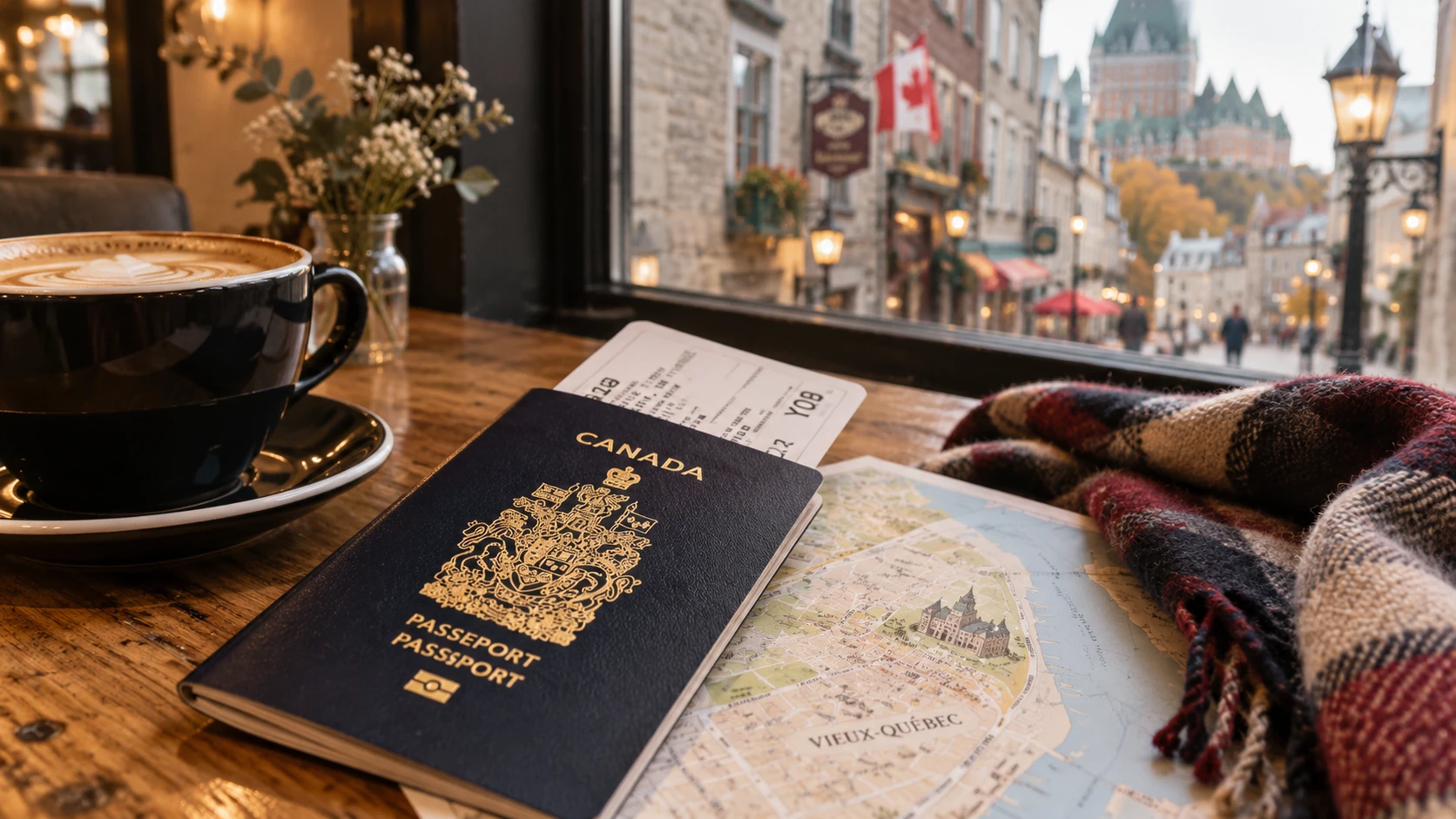
An accommodation booking is a collection of practical promises. The arrival date, the type of stay, the address and the conditions matter more to your preparation than the mood of a photograph. Before you leave, turn that collection into a short record you can consult without having to reconstruct the conversation.
These are editorial suggestions for organising a stay, whether it is a visit within Canada or one part of a journey abroad. Policies belong to the accommodation provider and your booking agreement. This article does not establish a check-in entitlement, a refund right or the availability of any service.
01 Keep the booking record together.
Save the confirmation, dates and full address in a private place you can find easily. Check that the name of the property or host matches the contact information you intend to use. If you booked through an intermediary, distinguish the booking platform’s contact from the person or team responsible for your arrival.
Read the actual terms attached to your reservation. Note any question about payment, cancellation or a deposit and ask the responsible provider to clarify it. A general article cannot tell you which conditions apply to a specific agreement. If you keep an expense note, label amounts in their actual currency; do not assume a price shown without context is in Canadian dollars.
02 Ask how the arrival will work.
Confirm the provider’s arrival instructions, including how to receive access and what to do if your expected arrival changes. Keep any access details private. A saved address is useful, but it does not answer whether there is a staffed desk, an agreed meeting point or a separate procedure at the time you intend to arrive.
Consider the bags as part of that plan. If you hope to leave luggage before or after the stay, ask whether that is possible and what conditions apply. Do the same for any transport arrangement. Avoid building the first day around a facility that has only been assumed from a photograph or a general property description.
03 Make your own needs specific.
Write down the features that are necessary for your stay, rather than merely pleasant to have. Describe an access requirement or another essential arrangement clearly to the provider and ask for an explicit answer. Broad labels can leave important details unresolved. Keep the response with the booking so you can refer to the same information on arrival.
If you are carrying medication, organise it for the journey as well as the stay. CATSA’s medication guidance addresses Canadian security screening. Permission through screening does not establish what another country allows you to bring in; check the destination’s relevant requirements separately. This journal does not provide medical advice or storage instructions for individual medicines.
04 Once inside, make a small orientation.
Locate the instructions you will actually need: how to contact the provider, how to return to the building and how to report a concern. Look over the arrangements you have received and raise a discrepancy while it can be discussed clearly. Record the facts of the issue and use the provider’s stated channel.
As an illustrative example, a traveller has confirmation of a late arrival but cannot find the access instructions. The useful next step is to contact the provider through the verified booking details. Guessing a procedure from another property’s website does not settle the question. This scenario describes a planning choice, not a reported incident.
05 Give the last key a place in the plan.
Before the final morning, confirm the checkout process and when you need to be on your onward journey. Gather the items you tend to spread around a room: chargers, documents, personal care items and anything placed in storage. A short personal sweep can be more useful than trying to reproduce somebody else’s elaborate packing system.
Keep the final booking record and any relevant receipts with your own travel paperwork. If something remains unresolved, note what happened and whom you contacted. For a journey outside Canada, review the questions in the government’s travel insurance guidance with your insurer before departure; coverage and exclusions depend on the policy. Accommodation and insurance arrangements should both be checked against their own terms.
Then let the accommodation note become a finished page. You can use the final stages of our eight-part checklist as a reminder, or move on to preparing for the return home.